
WHAT IS KINESIOLOGY TAPING?
WHAT THE TAPE DOES
WHERE IT IS USED
- Application time
- 10 – 20 min
- Tape stays on
- 3 – 5 days
- Anaesthetic
- Not required
- Pain
- None
- Back to normal
- Immediately
- First effect
- Straight after application
- Applied by
- Physiotherapist
- Where
- Your own home
The application, step by step
Taping is carried out by your physiotherapist in your own home and takes no more than twenty minutes. You can go about your day as soon as it is done.
- I. ASSESSMENT
Examination
Where the pain is, which direction of movement is restricted and how the muscles are working. Whether the tape is for support, for release or for swelling is decided here.
- II. PREPARATION
Preparing the skin
Cream and oil are cleaned off the area and hair trimmed if necessary. Dry, clean skin is what keeps the tape on for three to five days.
- III. APPLICATION
Taping
The tape is applied at a specific tension and direction according to the muscle and the aim. The same tape produces a different effect at a different tension, which is why the technique matters.
- IV. FOLLOW-UP
While it is on
You can shower and exercise with the tape on. When its time is up it is removed slowly, in the direction of hair growth, without damaging the skin. A fresh one is applied if needed.
Why patients choose it
What stands out when it is compared with conventional strapping and splints.
Does not restrict movement
Unlike a bandage or a splint it does not lock the joint. The muscle and joint keep moving naturally while being supported.
Support that does not stop
The tape stays on the skin for three to five days, working in the hours between sessions as well.
No medication
The tape contains no drug. Its adhesive is acrylic and activates with body heat.
Water resistant
You can shower and swim. Pressing it dry with a towel afterwards is enough.
Swelling and bruising
By lifting the skin very slightly it makes room for lymph flow, helping swelling and bruising clear faster.
Works with exercise
By cueing the correct muscle it helps the movement be performed properly during exercise.
What does the tape do on the skin?
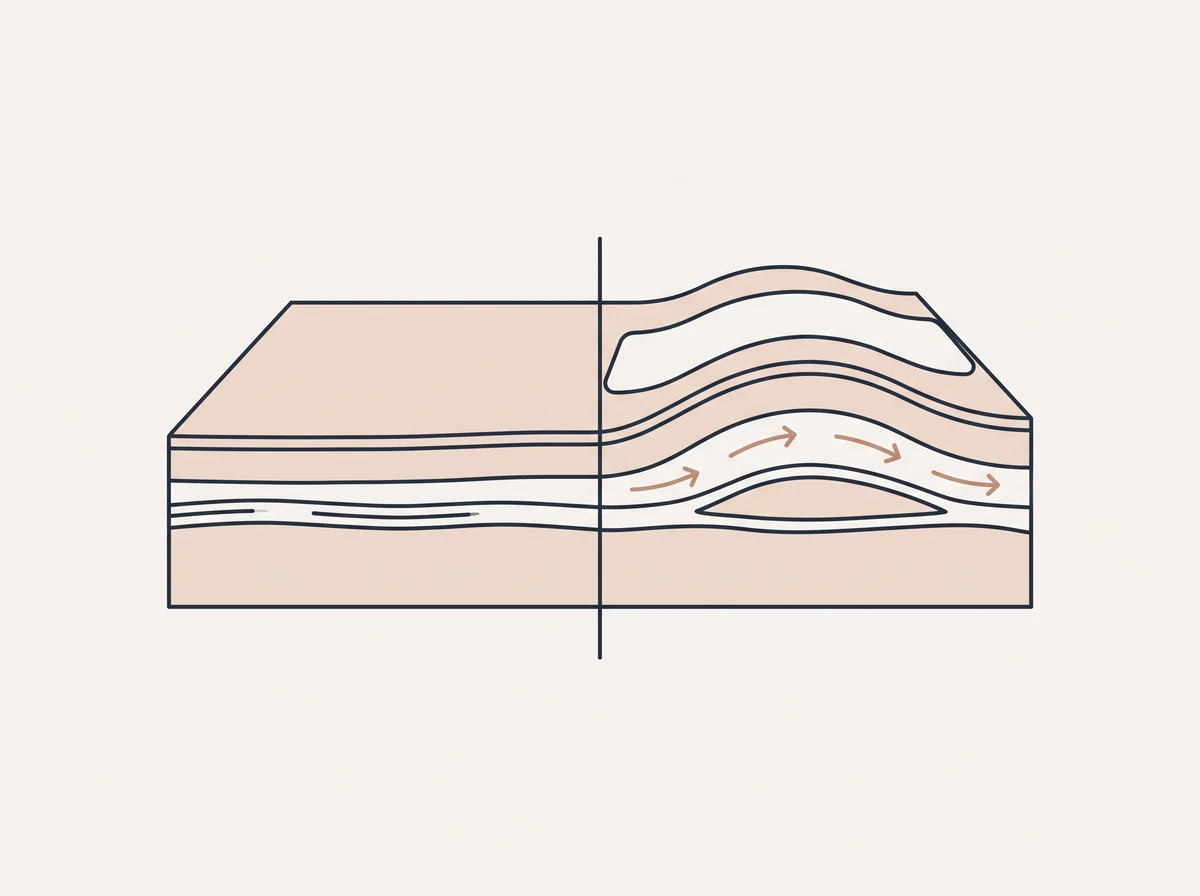
Kinesiology tape is elastic, cotton and breathable, and its elasticity is close to that of human skin. Applied at a specific tension it lifts the skin very slightly, creating a tiny space between the skin and the tissue beneath.
That space does two things. Lymph and blood flow through the area become easier, so swelling clears faster; and because the sensory receptors in the skin are continuously stimulated, pain perception drops and the muscle is guided back towards its correct working pattern. The colour of the tape makes no difference to any of this.
Which complaints is it used for?
• Sports injuries: sprains, strains and muscle tears
• Knee, shoulder, wrist and elbow pain
• Neck and back pain related to posture
• Swelling and bruising after surgery or trauma
• Lower back and abdominal support in pregnancy
• Shoulder subluxation and muscle support after a stroke
Is taping a treatment on its own?
No. Kinesiology taping is a supporting method that reduces pain, helps circulation and reminds the body of the correct movement. If the cause is a weak muscle, poor posture or a faulty movement habit, the complaint returns unless those are corrected with exercise. The tape earns its place alongside exercise and manual therapy.
What patients ask most
How long does the tape stay on, and can I shower?
The tape usually stays on for three to five days. It is water resistant, so you can shower, swim in the sea and use a pool. When it gets wet, press it dry with a towel rather than using a hairdryer.
Does it irritate the skin?
The adhesive is latex free and causes no problem on most skin. On sensitive skin a small test strip can be tried first. If itching or burning appears, the tape should be removed.
Do the colours mean anything?
Not in terms of treatment. The colours are the same material and have no different effect. The choice is purely visual; skin-tone tapes are less noticeable in daily life.
Can I take it off myself?
Yes. Remove it dry, stretching the skin with your other hand and peeling slowly in the direction of hair growth. It comes off more easily straight after a shower. Pulling it off sharply damages the skin.
Who should not have it?
It is not applied over open wounds, eczema, psoriasis, sunburn or infected skin. It is not used where deep vein thrombosis is suspected, in untreated cancer, in swelling caused by advanced kidney or heart failure, or for anyone allergic to the tape.
Is taping right for you?
Let us look at the complaint where you are. Our physiotherapist comes to your home, examines you, says whether taping is appropriate and applies it in the same visit if it is. This first assessment is free.
Call us+90 (212) 983 40 67
This page is for information only and does not replace examination or medical diagnosis.