
GERIATRIC REHABILITATION
A functional approach for older people

 Written by: Muhammet Talha Bagdat, PT | Physiotherapist | Last updated: 20 September 2026
Older people need treatment to restore the functions they use every day. Geriatric rehabilitation, which has come to be recognised as an important field in recent years, is the whole set of restorative, adaptive and educational services aimed at preventing, delaying or reducing the loss of function that comes with age or with illness. It has a central place in the care of older people: it takes medical assessment, health care, anatomy and function together, and works to improve quality of life.
Who is geriatric rehabilitation for?
It is not only for the period after an illness. It is also used to slow the loss of strength and balance that comes with age. It is particularly useful in these situations:
• After hip or knee replacement
• Older people who have had a fracture after a fall and are afraid of falling again
• Neurological conditions such as stroke and Parkinson's disease
• Loss of strength after a long period in bed
• Osteoarthritis, osteoporosis and chronic pain
• Loss of endurance related to respiratory and heart conditions
Why function is lost with age
Muscle mass falls with age — this is called sarcopenia. Losing muscle is not only about weakness: it also means loss of balance and a greater risk of falling. Add restricted joint movement, changes in vision and in the balance organ, the side effects of medication and inactivity, and a closed loop forms: the less someone moves, the weaker they get, and the weaker they get, the harder moving becomes. The purpose of rehabilitation is to break that loop.
How the assessment works
In the first session the physiotherapist measures muscle strength, joint range and balance, and watches everyday movements: getting out of a chair, walking, climbing stairs. How independent the patient is in dressing, bathing and using the toilet is established. The programme is then built on that assessment, around goals the patient has chosen.
What the programme includes
• Strengthening — work aimed particularly at the leg and hip muscles, made progressively harder
• Balance work — standing, weight transfer and balance exercises in safe conditions
• Gait training — teaching the correct use of a stick or a walking frame where one is needed
• Flexibility and joint range — preserving movement in stiffened joints
• Breathing exercises — building endurance and protecting lung capacity
• Daily living activities — relearning safe ways to get out of bed, sit down and transfer
Preventing falls: changes around the house
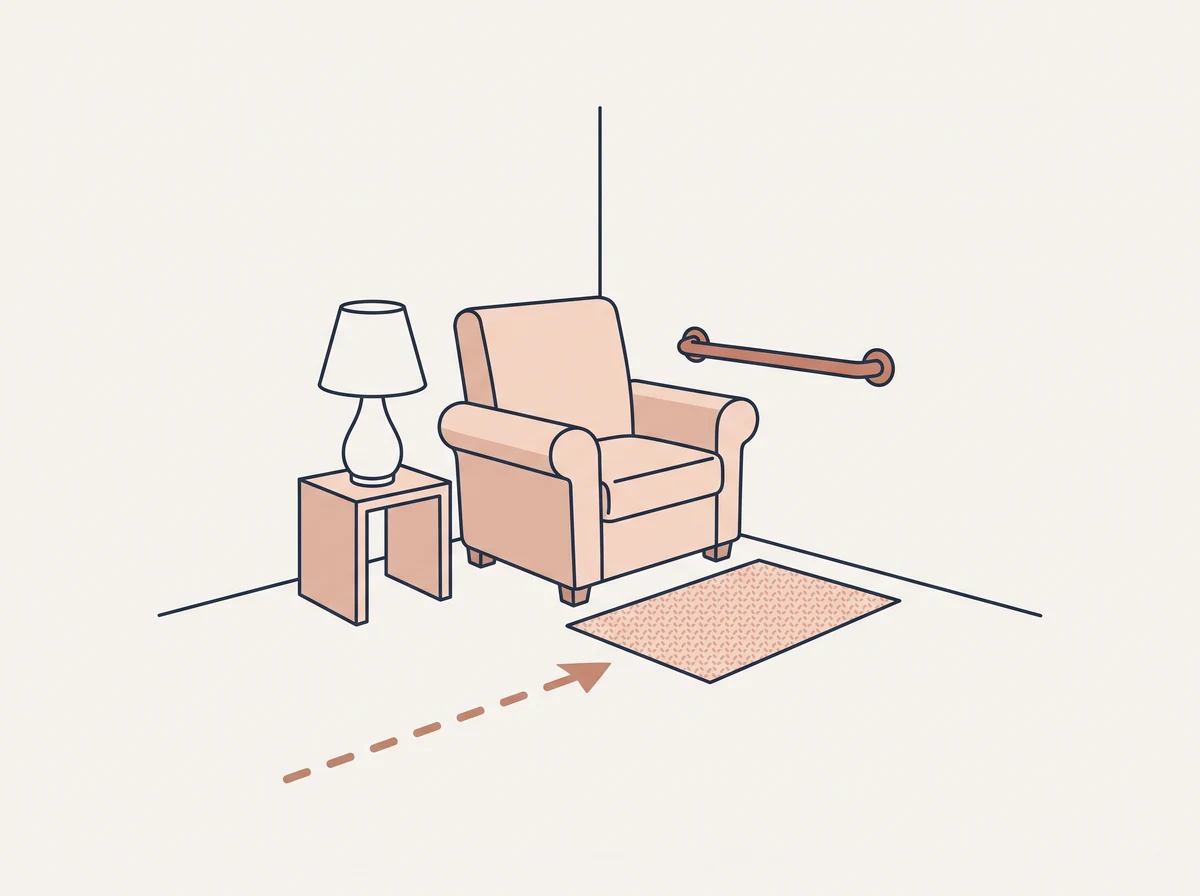
Most falls among older people happen at home. Simple changes cut the risk noticeably: removing or fixing down loose rugs; lighting the hallway and the route to the toilet at night; fitting a grab rail and a non-slip mat in the bathroom; keeping frequently used items at a height that can be reached without stretching; wearing indoor shoes with a non-slip sole and a closed back. Because a physiotherapist working in the home can see these things and suggest them on the spot, carrying out geriatric rehabilitation at home is an advantage in itself.
How often, and for how long?
The programme is usually planned as two to three sessions a week and runs over a period of weeks. Progress is slower in older patients, so exercise intensity is increased gradually and signs of fatigue are watched closely. Keeping the strength that has been gained depends on continuing with a home programme afterwards.
Advice for families and carers
Doing everything for an older person is the most common mistake. Every task they can manage themselves — slowly, with more effort — is exercise. Help where safety requires it, and step back where it does not. Encouragement works better than correction, and a consistent daily routine works better than occasional long efforts.
This page is for information only and does not replace examination or medical diagnosis.